I came across this little paradox of history when I read, “The Race for Paradise” in 2018.
Bashir saw the strange spectacle of the Frankish1 lord of Antioch marching alongside Muslim troops from the lord of Aleppo, arrayed in battle against the Sultan’s representative, the Muslim lord of Mosul, who marched with his own Frankish1 allies from Edessa.
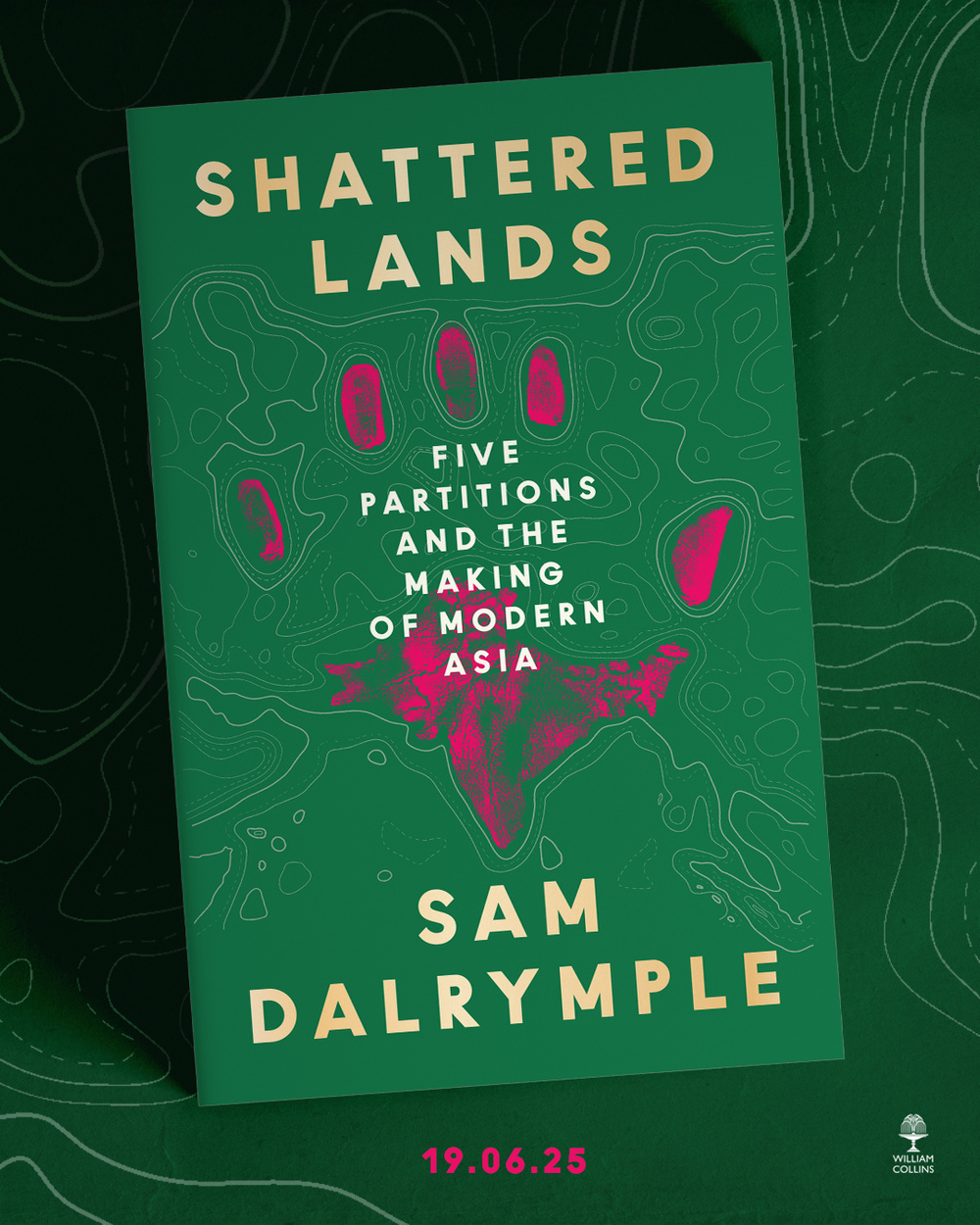
Close to eight hundred years later, history rhymed. From Sam Dalrymple’s, Shattered Lands …
Communities divided between India and Burma like the Mizos and Chakma thus found themselves pulled into the war over Pakistan. Later India would send a battalion of Tibetan refugees against them, so that on the eastern front the battle over the future of the Islamic Republic of Pakistan ironically involved two rival Buddhist militias – neither of them Bengali.
That’s always the zeitgeist apparently.
People are dorks.
Showing grace to folks “not like us” is hard.
Let me get the one nitpick out of the way first. It’s a bit rich for Sam to play doomsayer for modern Asia or roleplay a stern parent by expecting us to behave “propah”. He thinks its an irony that
in the twenty-first century it is easier for Indians, Pakistanis and Bangladeshis to meet in England, their former colonial power, than to meet in the subcontinent itself.
The fact remains that Britain abandoned its Empire. They just upped sticks and left. With nothing left for us.
Yes it is sad that there are divisions. But leave the healing to us.
I don’t want the man2 who stabbed me in the back, in the dark, and looted and raped everything of mine, to come and preach to me of forgiveness or how division is bad for us..
Sam says,
The last decade has witnessed the decline of globalisation, the strengthening of borders and the resurgence of nationalism across the world. India’s Partitions are a dire warning for what such a future might hold.
I sincerely hope this is a message to the nations of the “first world” to stop ravaging our lands and not for folks in Africa and Asia. Be really hypocritical if it wasn’t.
And now to the rest of the book.
It’s a real tour de force of history.
Beginning in the late 1920s and ending in the mid 70s, the book traces the breakup of the British Indian Empire.
So many pieces of jumbled childhood memories, now make sense. The reason why so many Goans and Mangaloreans rushed to do labour in the erstwhile Trucial States in the mid 80s (modern UAE and other neighbouring countries). I have seen old Indian currency used in Aden (my relatives), as well as Indian currency that could be used in Saudi Arabia when folks went on the Haj (via friends). Why when I went to work in the Eastern part of my state (Maharashtra) in my younger years, the dialect and culture felt different (Because Dakhani. Because erstwhile Hyderabad). Why there used to be so many State Banks.
While I was fairly well informed about how Pakistan and Bangladesh came about, I wanted to learn more about of the Easternmost (Burma) and Westermost (Arabian States) flanks of the British Indian Empire. The book delivered in spades.
It’s extremely well researched, and Sam has the blood of his ranconteur papa when relating this (hi)story.
The history I loved and related to the most, was Angami Zapu Phizo’s lifelong struggle (and failure) to build a Naga nation. Phizo keeps appearing in nearly every Partition story, trying his hardest. The Nagas were the best part of the book.
I have friends, who still reel from the partitions, who have left family on the other side, who have lost lands and property and freedom.
My father (born in 1942) as well as several other older friends (born in the 1930s) used to lament of all that was lost, without being able to articulate what and how.
This book made me realise how and just how much.
Feedback on this post?
Mail me at feedback at this domain.
P.S. Subscribe to my mailing list!