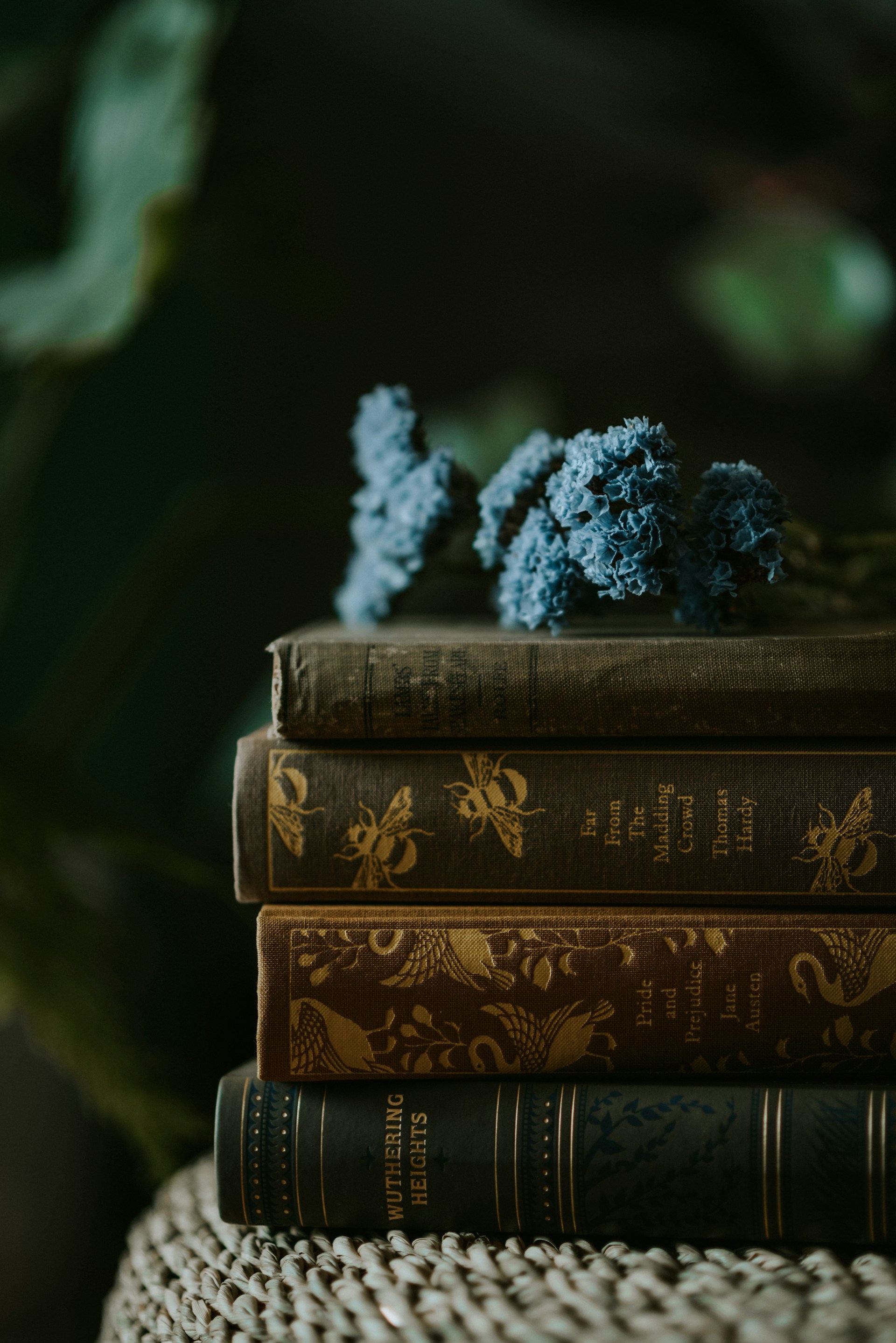
Got quite a bit of reading done this month, because there was little else to do with the root canal and other things that kept popping up. Reading kept me sane.
Empire Podcast: Spice Wars, The Battle of the East India Companies, Episodes 358-360#
While India had the EIC later, Indonesia and its surroundings were ground earlier under the boot of the VOC. According to Wikipedia:
Statistically, the VOC eclipsed all of its rivals in the Asian trade. Between 1602 and 1796, the VOC sent nearly a million Europeans to work in the Asia trade on 4,785 ships, and netted for their efforts more than 2.5 million tonnes of Asian trade goods and slaves. By contrast, the rest of Europe combined sent 882,412 people from 1500 to 1795. The fleet of the English, later British East India Company, the VOC’s nearest competitor, was a distant second to its total traffic, with 2,690 ships and one-fifth the tonnage of goods carried by the VOC. The VOC enjoyed huge profits from its spice monopoly through most of the 17th century.
The series details the history of the two early corporate raiders and plunderers, and the carnage they wrought in South East Asia and the Indian subcontinent.
The Rest is History, The Fall of the Incas, Episodes 644-649#
I don’t know why but I always assumed South America was colonised east to west. This series along with the Simon Bolivar series last month gives me the idea, that it went from the Caribbean to Mexico and then downwards towards the top of South America and down the west coast. I should read more history about the continent.
This series, somehow, felt even more heart breaking than the Aztecs. The greed and the avarice and the deception and the desperate, brutish, violence of it all, should leave you shaking with rage.
The Secret Pilgrim, John le Carré#
The probably will be my last le Carré for a while. Too much bleakness, while real life is in a tumult is not good. A collection of stories big and small, with Smiley playing the framing device. This is more about Ned and his adventures in the service. I loved it.
Platform Decay, Martha Wells#
Yay! New Murderbot episode! Bought and read in a day flat. Not as good as the older Murderbots, but even a middling Murderbot book is much better than most other books. Loved it to bits. Plot is the same as every other Murderbot. Murderbot rescues someone. What else is new? Murberbot now has regular “check-ins” with its feelings.
Control, Andy Diggle, Angela Cruickshank, Andrea Mutti & Vladimir Popov#
A modern hardboiled comic … err graphic novel. Cleaned out a lot of my comics. Most of the old ones have not aged well. And most of the new ones are just out there to shock you. Alan Moore really raised the bar. Nothing really comes close. His are the only ones I’ve held on to. V for Vendetta is the only one of two hardback I have. The other is my lovely Sandman series (written by the asshole who shall not be named, and illustrated by Keith, Dringenberg et al.)
Back to Control. This plays like an old potboiler. Detective is framed. Detective has to break the law to get justice and show her innocence. Pretty decent writing. But lovely art.
Chung Ju-yung & Hyundai, Farnam Street Podcast#
This is Shane Parrish trying to pull an Acquired like episode. Really, really, really good.
The (hagiographic) story of Chung Ju-Yung’s life and how he built Hyundai and was a major driving force behind South Korea turning into one of the largest economies in the world.
Steve Jobs in Exile, Geoffrey Cain#
If Becoming Steve Jobs, tracked Jobs and his personal growth through his Next years, this one fleshes out nearly everything Schlender talked about in his book. If you are interested in biographies or Steve Jobs, this is definitely worth a read. I bought it because this is the only era of Jobs’ life and career that I’m interested in. The turnaround of Apple was something started just as I entered the workforce and was something I lived through. The early Apple, I already know lots about. So I’ve always wanted to know what happened in the “lost decade.” Becoming Steve Jobs and Steve Jobs in Exile are a good duology to know everything about that era.
Apple: The First 50 Years, David Pogue#
If you want an grand overview of Apple’s history, look no further. Pogue probably leveraged damn near every connection he must have had to write this. It’s a lovely history of the company. Gets a little sloggy in parts, but a good book nonetheless.
Learning Object-Oriented Programming, Design and TDD with Pharo, Stéphane Ducasse & Damien Pollet#
I just had to understand what message passing meant, and what Objects were, in the way the original authors intended it. Pharo is a spiritual descendant of Smalltalk, and like Lisp, works in a self contained environment where darn near everything is an object and can be reconfigured. This book gave me a really good base on which to build my further programming knowledge when it comes to Object Oriented Programming. This book—along with others—is freely available on the Pharo website.
Data Structures the Fun Way, Jeremy Kubica#
Reading a No Starch book is always fun. And I read this to get a handle of just what the big picture was on Data Structures. This is a really good book that does that. Examples are clear. Ideas are well explained. And nothing gets too dreary. The coffee analogies are just … barista’s kiss!
The Art of Reading, Timothy Spurgin (The Great Courses)#
This is the companion to Adler’s, How to Read a Book. Adler is about the craft, while Spurgin is about the art. They both complement each other. Adler comes from how to use your mind to tackle the rectangular piece of dead tree in front of you, in a methodical manner. And once you have that, Spurgin then takes you on a journey of just how large the world of reading is. How to think about narration. And the basics of storytelling. Of plots and plotting. The rise of metafiction. What it means to read closely and carefully. And how even small details all contribute the the work as a whole. It truly has made me want to be, what Spurgin calls, “an artful reader.”
This series of lectures was something I bought on a whim when I was trying to learn Mathematics via the Great Courses during Covid.1 And it just sat on the shelf, until I realised, I could just convert the videos to audio and then listen to them as I potter about the kitchen in the mornings. Halfway through the book, I also found that the Great Courses were available as audiobooks on Audible as well. So my wishlist is damn near full for the next two years now. 😂 So hopefully there will always be one of these courses I do every month. These are really lovely.
Going through this course, also finally helped me clarify to myself, just what it is that I consider a really good book. It has to be beautifully written. And the writing has to match the world and the genre. It also makes me realise books like these are few and far between, so now it also makes me a more patient book buyer :)
Some examples: Richard Powers in The Overstory, Ursula K Leguin and Tamsyn Muir with all their works of fantasy, and Peter Watts too with his hard edged, dark, science fiction. And then there’s always the classics, which I am now slowly discovering and enjoying. Wish me luck!
Feedback on this post?
Mail me at feedback at this domain.
P.S. Subscribe to my mailing list!
don’t ask why. ↩︎