April was as busy as March, with hardly any time, between returning from Kubecon, catching up with everything and then once again getting ready to visit a client in early May. Did get quite a bit reading done though.
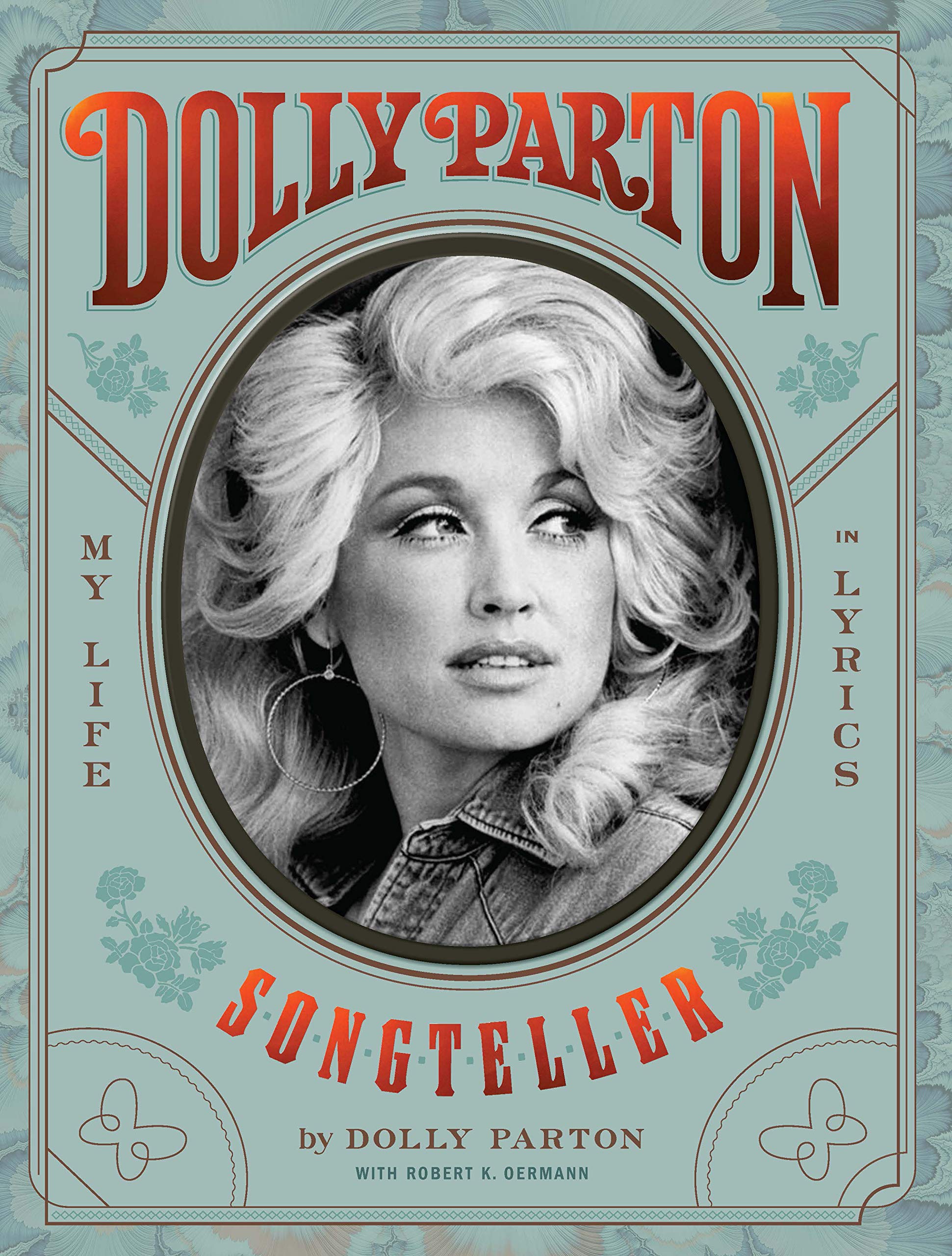
As you can see above, I was enchanted by the magic of Dolly Parton all this month!
Deep Questions, Cal Newport, Episodes 391-400#
I’m going to stop counting these episodes as books now.
Cal’s getting more prolific and repetitive.
Neither of which are bad things at all.
But this means that I now listen to him, like I listen to my old songs or Ziglar tapes.
Just so that I can hear their voices and remember their principles.
400 seems to be a lovely place to stop counting.
His advice and work on the intersection of life and craft, is invaluable to me, and you can be sure, I’ll be listening as long as he is sharing his thoughts.
Lincoln the Unknown, Dale Carnegie#
This is a book I read when I was a child and when I came across it in a flea market, I picked it up out of sheer delight and nostalgia.
It presents Lincoln as a moral guide with plenty of stories of his life, his family and his work. No critical or academic study here. It has quite a few facts and a great deal of hagiographic admiration as well.
I absolutely loved it!
Empire Podcast#
Indian Uprising 1857, Episodes 322-329
The First War of Independence, the Indian Uprising of 1857, the Great Sepoy Mutiny, it goes by so many names.
This series goes into quite a bit of depth on the events upto and during the war for independence and presents many, many points of view.
This was a wonderful listen.
The Bronze Age Apocalypse, Episodes 332-337
A small series on a old civilisation extant in the Levant and its relationships with other places in the Mediterranean.
The Middle East: From the Arab Cold War to the Israeli Invasion of Lebanon, Episodes 346-353
If you want to know all the context for what’s happening in Iran now, go listen to this series. Very insightful.
The Beryl Coronet, The Stockbroker’s Clerk, The Six Napoleons, Sherlock & Co. Podcast, Season 40, 41 & 42#
A series of tiny adventures stringing along a much larger arc. Who is the Spider? Is it Moriarty lurking in the shadows? It’s getting thrillier and thrillier!
Literature Ideas, You Really Need to Know, John Sutherland#
Lots of concepts very simply explained and thought through. Everything I found here, will help me be more introspective about all future (good) books I read. I learned quite a lot. Here’s a bit about classics …
‘Classic’ – a debased term? Eliot’s question (what is a classic?) remains tantalizing; and the abuses of the term he joked about are still everywhere. ‘Classic comedy’ is more likely to mean Carry On Up the Khyber than Aristophanes. Football matches, rock-and-roll and tea cakes are all given honorific ‘classic’ status (cigars are also labelled ‘Hamlet’ – but that, like nags called Dante, is something else).
Overused and abused as the term is, literature still needs it. Properly applied, the idea of ‘classic’ points towards something that we hold to be centrally important – although defining that something is tricky.
Eliot saw classics as fruit of the society in which they happened. ‘A classic,’ he told his Virgilian audience, ‘can only occur when a civilization is mature; when a language and a literature are mature. And it must be the work of a mature mind.’ He doubtless made this lofty statement in an auditorium where the blackout blinds were pulled down, as part of the protective measures against German bombers aiming to blast the assembled classicists to pieces. Whatever epithet one chose in 19441 for the civilization that had produced Virgil (currently under the heel of Mussolini), ‘mature’ would not be it.
The classic and empire: [Frank] Kermode was sharper in his sociology than Eliot. It was not a civilization but an empire – with all the temporal (and, if necessary, brutal) cultural power imperialism implies – that supplied the foundation for the classic. If a language is, as linguists like to joke, a dialect with an army behind it, then classic literature is writing with an imperium behind it. This is easily enough tested with reference to the European Union, which currently has some 27 member countries. Which of those countries can be said to have classic literatures, as opposed to some impressive works of literature? The answer would be those which – before the twentieth-century winds of change blew – had great empires (Britain, France, Spain, Italy, Portugal, Germany, Holland, Austria, Belgium). Does Luxembourg have its classics? Or Moldova? Where are their Shakespeares, Racines or Cervantes?
In a brilliant critical move Kermode argues that it is the very pliability of the classic that is its essence. It ‘accommodates’ – makes itself at home – wherever and whenever it finds itself. It is the classic’s ability to be both antique, yet modern, its infinite – but never anarchic – plurality that defines it. A work like King Lear, Kermode argues, ‘subsists in change, by being patient of interpretation’. Every generation will read, or understand, King Lear differently insofar as every generation is different from its predecessors. No final version, or interpretation, of the play can be achieved. But every generation will find its own satisfactory interpretation. And the classic is tolerant of each and every different explanation of itself.
The condensed idea
The classic is the gold standard of literature – but all that glistens is not classic
Songteller: My Life in Lyrics, Dolly Parton#
I listened to this on audio first, because I wanted to hear Dolly sing, just as I wanted to hear Sara Bareilles tell of her songs in her book and Judi Dench speak of her perfomances in hers. And then I went and bought it as an ebook as well, because I wanted to see all the pictures as well :)
My childhood was Dolly Parton (and Kenny Rogers and Willie Nelson and other country artists). And I probably listened to her as she hit her stride as an extremely successful solo artist. Because I had no idea of her variety show on television and all her work with Porter Wagoner for close to two decades before her solo work, seventies onwards.
I loved hearing her voice, humming along and laughing along and telling stories of her dad and her husband and all her big family and the struggles she faced and the way she handled fame, showcased in short, rapid vignettes. If you love her music, this is a must listen. Dolly’s amazing!
Dolly, talking about her song, “The Sacrifice” as well as reminiscing on her journey.2
This is a song that I wrote that just came out of my heart and soul, my gut. Sometimes you wonder if you’ve made all the wise choices. Would you do things differently if you could?
People say, “How come all of this success happened to you?” I say, “Because I sacrificed whatever I had to in order to get it.” You can’t veer off into this and that. You can’t lose your momentum if you’ve got a dream and a focus. I always felt like God was directing me. So I’m not going to let up until He says, “Stop.” I just keep going, like a horse with blinders on.
I wrote “The Sacrifice” because somebody asked me that question. Well, the answer is, I gave up time with family and friends. I gave up vacations for work. I “carried my pail.” Like the song says, “You don’t drink the water, if you don’t drill the well.” One of my favorite lines I ever wrote is, “I was gonna be rich, no matter how much it cost / And I was going to win, no matter how much I lost.”
It’s only in the wee hours, when you’re fading off to sleep, that you ask, “Is it worth the sacrifice?” I think I probably wouldn’t have done anything different, because I believe that this is what I was supposed to do. Who am I not to sacrifice to make things better for the people here that I am responsible for?
Yes, I would do it all again. No doubt about it.
Feedback on this post?
Mail me at feedback at this domain.
P.S. Subscribe to my mailing list!